ElevenLabs Credits: What a Funnel's Audio Actually Costs
ElevenLabs does not sell minutes; it sells credits, and one credit is one character of script on text to speech. That single rule makes a funnel's audio bill easy to predict once you count characters, and easy to blow once you add music, dubbing or a voice agent, which draw from different meters. Three worked examples below, from a solo launch to a localised agency funnel.
This article is a documentation review: it is based on the vendors' own published pages, checked on the date shown. We may earn a commission from some links; it never affects what we recommend.
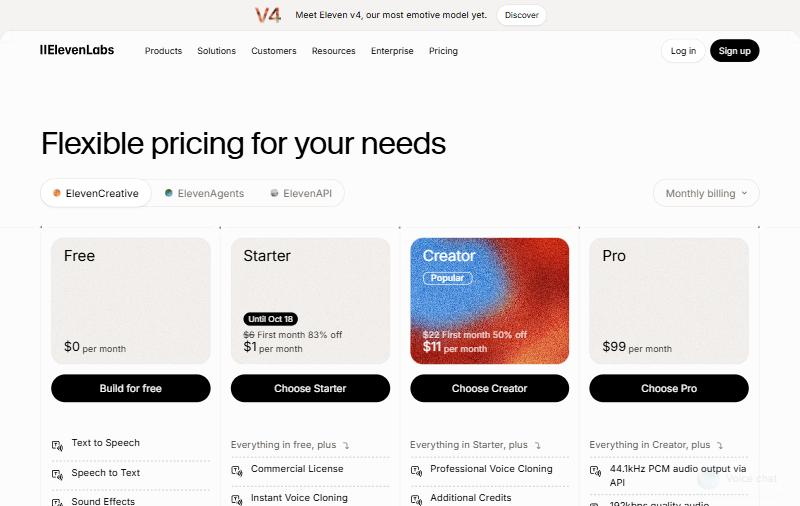
The ElevenLabs pricing page is honest and still confusing, because it describes three products with three billing units on one page. The creative tools bill in credits, voice agents bill in call minutes, and the API bills in both depending on the model. For a funnel, almost everything you will buy sits on the first meter, and the first meter has one rule: a character of text costs a credit. This article turns that rule into three worked budgets and shows which plan each one lands on, using the pricing page as read on October 13, 2026 and the product pages on October 15.
If you have not decided where a voice belongs in your funnel yet, start with the step-by-step playbook, put a voice on every step of your funnel, and bring your scripts back here to price them. The live plan cards are on the ElevenLabs pricing page; the numbers below are what they showed.
The plan ladder in one table
Six self-serve tiers plus Enterprise. Monthly prices are the headline rate; annual billing is described on the page as two months free, so divide by twelve after paying for ten.
| Plan | Monthly | Monthly on annual billing | Credits a month | About how much speech | Commercial licence |
|---|---|---|---|---|---|
| Free | $0 | $0 | 10,000 | 10 minutes | No |
| Starter | $6 | $5 | 30,000 | 30 minutes | Yes |
| Creator | $22 | $18.33 | 121,000 | 121 minutes | Yes |
| Pro | $99 | $82.50 | 600,000 | 600 minutes | Yes |
| Scale | $299 | $249.17 | 1,800,000 | 1,800 minutes | Yes |
| Business | $990 | $825 | 6,000,000 | 6,000 minutes | Yes |
| Enterprise | Custom | Custom | Custom | Custom | Yes |
Two rows deserve a second look. The free tier is the only one without a commercial licence, so it cannot be used for a published ad, landing page or email audio; it is for auditioning voices. And Starter at $6 is where the licence begins, which makes it the real entry price for funnel work, not $0.
On the day we read the page it also showed promotional first-month prices: Starter at $1 instead of $6 and Creator at $11 instead of $22, labelled as valid until October 18. Promotions rotate; do not plan a budget around one.
The worksheet: count characters, not minutes
The pricing page converts credits to minutes at roughly 1,000 characters per minute of speech. Scripts read faster or slower than that, so the safer way to budget is to count the characters in the script you actually wrote. Any text editor shows the count.
Two rules sit on top of the character rule, and both cost people money on their first invoice.
- Every generation is charged, including the ones you discard. Regenerating a 1,400-character landing page clip four times to tune the delivery costs 5,600 credits, not 1,400. Lock the copy before recording.
- Other creative products draw from the same pool at different rates. Sound effects, music, voice changing and dubbing all pull from your monthly credits, and dubbing in particular costs far more per minute than plain speech. If you add any of them, budget them as separate lines in the worksheet.
With that, the worksheet is four columns: asset, characters, regenerations you expect, and credits (characters multiplied by generations). Total the last column, add a 25 percent margin for edits you did not plan, and read the plan ladder.
Example 1: a solo course launch, one language
A creator launching one course with a lean funnel: three ad variants, one landing page clip, one checkout reassurance clip and a five-email welcome sequence. Characters are counted from typical scripts of those lengths.
| Asset | Characters | Generations | Credits |
|---|---|---|---|
| 3 ad scripts, 30 s each | 1,500 | 2 | 3,000 |
| Landing page clip, 90 s | 1,400 | 2 | 2,800 |
| Checkout clip, 20 s | 300 | 1 | 300 |
| 5 welcome emails | 9,000 | 1 | 9,000 |
| Total before margin | 15,100 | ||
| With 25% edit margin | about 18,900 |
That lands inside Starter's 30,000 credits with room left. At $6 a month, or $5 on annual billing, the audio for the whole launch costs less than one coffee a week, and the licence covers publishing all of it. The month after launch, when nothing new is recorded, the unused credits simply go unused; the page does not describe rollover for self-serve plans, so do not count on it.
The remaining decision for this creator is where the course lives, which is a different bill entirely; the trade-offs between two common hosts are set out in Kajabi vs Kartra for selling a course.
Example 2: a performance team testing creative every week
A paid-social team that ships ten new ad variants a week, each 30 seconds, and regenerates each one twice on average while tuning the hook. Plus a monthly refresh of two landing page clips.
| Asset | Characters | Generations | Credits a month |
|---|---|---|---|
| 10 ad scripts a week × 4 weeks | 20,000 | 3 | 60,000 |
| 2 landing page clips, 90 s | 2,800 | 2 | 5,600 |
| Hook tests, 50 characters × 40 a week | 8,000 | 1 | 8,000 |
| Total before margin | 73,600 | ||
| With 25% edit margin | about 92,000 |
This is a Creator-plan workload: 121,000 credits for $22 a month, or $18.33 on annual billing. Starter's 30,000 would run out in the second week. Pro at $99 is not needed unless the team also localises, which is the next example.
Note what moved the number: not the number of ads, but the regenerations. Three generations per script triples the ad line. A team that writes and approves hooks as text before recording, then records once, would fit the same output into roughly 35,000 credits and could sit on Starter for a while longer.
Example 3: an agency funnel in four languages, with a voice agent
An agency running one hero funnel for a client in English, Spanish, German and French, and adding an inbound voice agent to qualify leads after hours. The creative side is the solo-launch set from Example 1, produced four times.
| Asset | Characters | Generations | Credits a month |
|---|---|---|---|
| Example 1 asset set × 4 languages | 48,800 | 1.5 | 73,200 |
| Short video dubbed into 3 languages | see note | separate line, higher rate | |
| Total speech before margin | 73,200 | ||
| With 25% edit margin | about 91,500 |
The speech alone again fits Creator. Two things push this budget off the credit meter entirely.
First, dubbing. Dubbing Studio translates and re-voices video and is available from Starter upward, but it draws credits at a much higher rate per minute than text to speech, and the rate depends on options such as watermarking. Price it from the pricing FAQ for your exact video length rather than from the speech conversion.
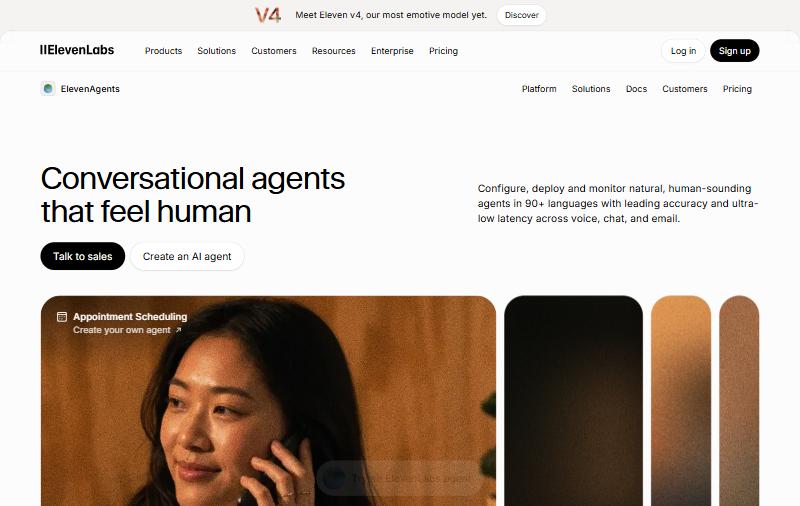
Second, the agent. ElevenAgents is billed per call minute on its own plan table, not in credits, and the language model that writes the agent's replies is metered separately again. Telephony can be a third line. So the agency's monthly bill is at least: a Creator subscription, an agent minutes bill, and an LLM usage bill. The ElevenLabs agents page carries the current per-minute rates; read them before quoting the client a flat figure.
When annual billing is worth it
Two months free is a 16.7 percent discount, which is the same arithmetic as most funnel builders' annual plans, covered in annual vs monthly billing: what you save. The question is the same too: will the usage be there in month seven?
- Solo launch (Example 1): pay monthly. One or two active months a year on Starter costs $6 to $12; a year prepaid is $60.
- Weekly creative team (Example 2): annual on Creator saves $44 a year and the usage is steady. Worth it.
- Agency with agents (Example 3): annual on the creative plan, monthly on everything else until the agent's minutes have three months of history.
Five lines to check on the invoice
- Credits used against credits included: if you are above 80 percent by the third week, the next tier is cheaper than overage.
- Any music, sound effect or dubbing usage, which share the pool at higher rates.
- Agent minutes, if you have an agent, on their own table.
- LLM usage for the agent, which is not an ElevenLabs credit at all.
- Whether the first-month promotional price has rolled off, so month two is not a surprise.
The short version
Count characters, multiply by the generations you expect, add a quarter for edits, and read the ladder: under 30,000 credits is Starter at $6, under 121,000 is Creator at $22, under 600,000 is Pro at $99. Keep dubbing and voice agents on separate lines, because they are billed on separate meters. And open the ElevenLabs pricing page on the day you commit, because the promotions and the credit rates in the FAQ are the two things on it that move.
All plan prices, credit allowances and conversions above are from elevenlabs.io/pricing as read on October 13, 2026 and the product pages on October 15, 2026. FunnelsStack may earn a commission if you subscribe through links on this page, at no extra cost to you.
Sources
- ElevenLabs pricing (plan ladder, credit allowances, annual billing, promotional first month) (checked Oct 13, 2026)
- ElevenLabs pricing FAQ (one character = one credit, per-product credit rates) (checked Oct 13, 2026)
- ElevenLabs agents page (per-minute billing, separate LLM metering) (checked Oct 15, 2026)
- ElevenLabs homepage (product lines ElevenCreative, ElevenAgents, ElevenAPI) (checked Oct 15, 2026)